
ProposalsProposal 848
ProposalsProposal 848
The Break Even Movement has made it clear that more performance-based decision making is necessary. CFMs use prediction markets to evaluate proposals BEFORE funding - ensuring only those with the highest predicted ROI get funded. This $90k development grant builds infrastructure that can turn Nouns treasury into a growth engine, enabling Nouns to sustain into the future and fund the next wave of Nounish innovations.
Out of 800+ Nouns proposals funded, few have returned money to the treasury.
While revenue generation wasn't the original focus, the Break Even Movement has sparked critical conversations about sustainability. The treasury has funded amazing projects, but without a way to predict outcomes, every proposal becomes a gamble.
The under explored solution? Actively increasing revenue flowing back through smarter allocation mechanisms.
Conditional Funding Markets (CFMs) use prediction markets to evaluate proposals before funding is allocated. Instead of relying on token votes, CFMs harness the wisdom of markets to estimate the impact of proposals, with forecasters putting real money behind their predictions.
At its core, Nouns DAO exists to allocate treasury resources effectively. We've all seen the challenges: which proposals deserve funding? How much? Are incentives aligned?
Remember the recent OneKey Hardware Wallet and Burner Wallet proposals? Instead of debating on the forum, imagine if both proposals were evaluated based on the market's estimate of how much revenue they would return to the DAO.
This applies to numerous proposals. Treasury Management proposals including 818 (Stake 1000 mETH) could be evaluated based on the estimated returns generated. Larger scale proposals such as 557 (Nouns Deli), 450 (Nounish Coffee Shop) or 757 (Nounish Landmark at Art City) could be evaluated based on their revenue or the average increase to Nouns auction revenue.
Whatever objective, CFMs ensure every dollar or ETH spent has a measurable, predicted return.
Optimism. Butter launched the first CFM with Optimism in March which showed promising results. According to OSO's dashboard, futarchy generated $61.50 in TVL per OP spent, compared to $0.28 per OP spent from the Grants Council. That's a 219x improvement in capital efficiency.
Uniswap Foundation. In July, Uniswap used a CFM to allocate $100k for growing Unichain, selecting Morpho based on market predictions rather than committee decisions. After 30 days, Morpho’s TVL increased by $96M which represents $960 in TVL gain per $1 spent.
These are the types of measurable results a Nouns Revenue Growth CFM would be capable of producing.
Compared to votes, where wrong decisions face limited consequences, CFMs enable a fundamentally different approach to capital allocation. Here’s how CFMs compare to the status quo.
| Feature | Traditional funding (e.g. token votes or committees) | Conditional Funding Markets (CFMs) |
|---|---|---|
| Performance-driven decisions | While proposals can include KPIs, decisions are often based on discretion, politics, or popularity | Markets forecast which proposals are expected to deliver the best outcome |
| Responsive to new information | Voters or committee members often lack time, context, or incentives to be properly informed – especially as the number of proposals grow | Markets update continuously as new data or beliefs emerge |
| Accountability if wrong | Decision makers face no direct consequences if they are wrong | Traders lose capital when they make incorrect forecasts |
Before Nouns can use CFMs, we need to build an adapter so the Nouns treasury can directly fund CFMs. All contracts developed will be open sourced. This development grant funds the following:
1. Scoping & design - Finalize design, development and deployment of crowdfunding module contracts. 2. Development - Build smart contracts for the vault and make UI adjustments.
3. Testing & audit - Run internal tests and receive a third-party audit.
4. Mainnet deployment & docs - Deploy contracts and publish documentation.
Beyond smart contract risk, a permissionless vault risks misallocating funds due to price volatility, oracle failures, or other distorted inputs.
Introducing a safeguard mitigates these risks. While the exact mechanism will be scoped during the initial phase, an example could be a timelock before funds are distributed where a community multisig could veto the decision.
Butter sees developing a safeguard as an important feature. However, it increases the resources required and Nouns may prefer a fully permissionless mechanism, so the safeguard has been included as a separate line item in the budget.
Baseline: 2-3 months to deploy the new vault contracts. Potential delays: audit findings (+2-4 wks) or extra safeguard R&D (+~2 wks)
Total Request: $90,000
Breakdown:
Once the crowdfunding module is built, a follow up proposal will be made to fund the first Nouns Revenue Growth CFM.
Every month without CFMs is potentially millions in suboptimal allocations. By passing this proposal, Nouns can:
Imagine a Nouns where every proposal comes with a prediction, every experiment has accountability, and every ETH spent has a purpose. That's the future CFMs enable.
Core docs:
Recent media:
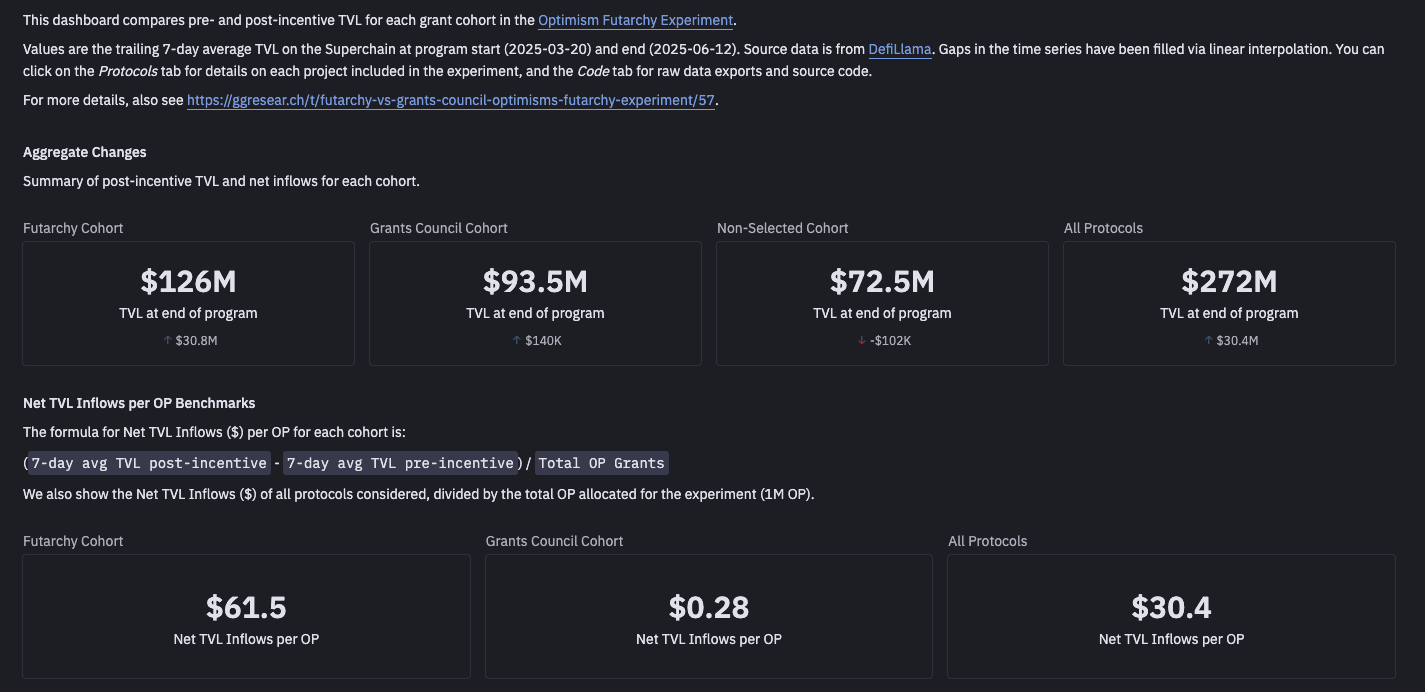 Optimism CFM impact
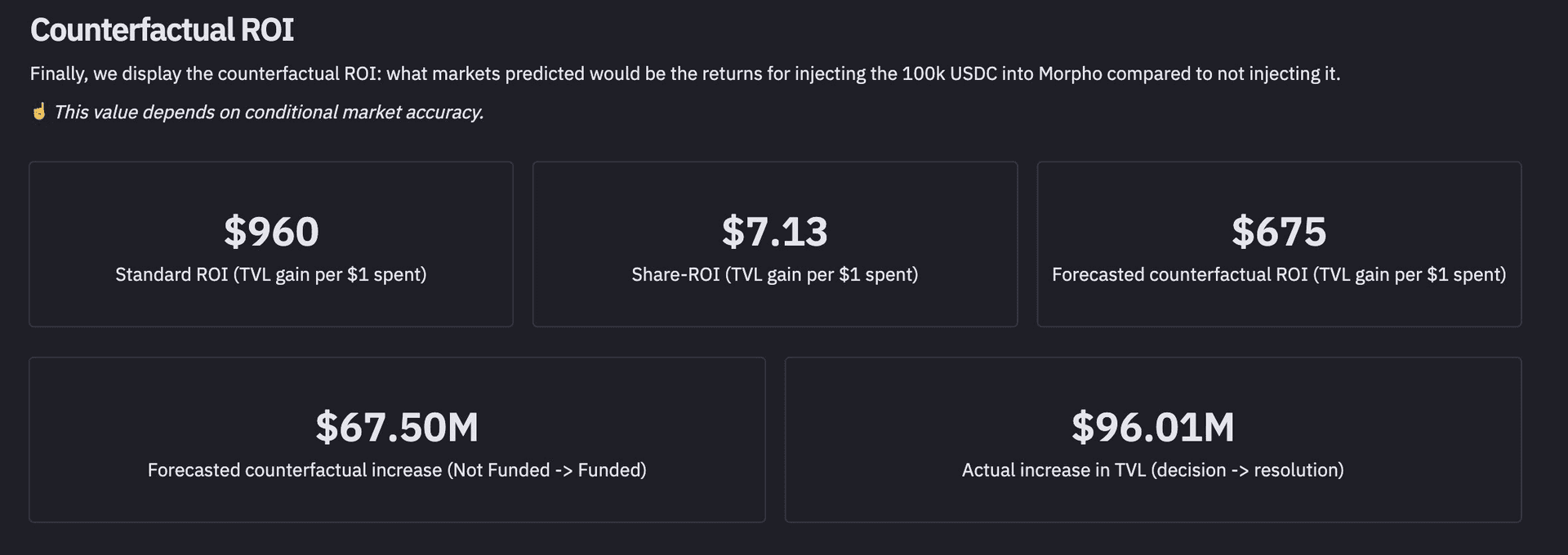 Unichain CFM impact
The Break Even Movement has made it clear that more performance-based decision making is necessary. CFMs use prediction markets to evaluate proposals BEFORE funding - ensuring only those with the highest predicted ROI get funded. This $90k development grant builds infrastructure that can turn Nouns treasury into a growth engine, enabling Nouns to sustain into the future and fund the next wave of Nounish innovations.
Out of 800+ Nouns proposals funded, few have returned money to the treasury.
While revenue generation wasn't the original focus, the Break Even Movement has sparked critical conversations about sustainability. The treasury has funded amazing projects, but without a way to predict outcomes, every proposal becomes a gamble.
The under explored solution? Actively increasing revenue flowing back through smarter allocation mechanisms.
Conditional Funding Markets (CFMs) use prediction markets to evaluate proposals before funding is allocated. Instead of relying on token votes, CFMs harness the wisdom of markets to estimate the impact of proposals, with forecasters putting real money behind their predictions.
At its core, Nouns DAO exists to allocate treasury resources effectively. We've all seen the challenges: which proposals deserve funding? How much? Are incentives aligned?
Remember the recent OneKey Hardware Wallet and Burner Wallet proposals? Instead of debating on the forum, imagine if both proposals were evaluated based on the market's estimate of how much revenue they would return to the DAO.
This applies to numerous proposals. Treasury Management proposals including 818 (Stake 1000 mETH) could be evaluated based on the estimated returns generated. Larger scale proposals such as 557 (Nouns Deli), 450 (Nounish Coffee Shop) or 757 (Nounish Landmark at Art City) could be evaluated based on their revenue or the average increase to Nouns auction revenue.
Whatever objective, CFMs ensure every dollar or ETH spent has a measurable, predicted return.
Optimism. Butter launched the first CFM with Optimism in March which showed promising results. According to OSO's dashboard, futarchy generated $61.50 in TVL per OP spent, compared to $0.28 per OP spent from the Grants Council. That's a 219x improvement in capital efficiency.
Uniswap Foundation. In July, Uniswap used a CFM to allocate $100k for growing Unichain, selecting Morpho based on market predictions rather than committee decisions. After 30 days, Morpho’s TVL increased by $96M which represents $960 in TVL gain per $1 spent.
These are the types of measurable results a Nouns Revenue Growth CFM would be capable of producing.
Compared to votes, where wrong decisions face limited consequences, CFMs enable a fundamentally different approach to capital allocation. Here’s how CFMs compare to the status quo.
| Feature | Traditional funding (e.g. token votes or committees) | Conditional Funding Markets (CFMs) |
|---|---|---|
| Performance-driven decisions | While proposals can include KPIs, decisions are often based on discretion, politics, or popularity | Markets forecast which proposals are expected to deliver the best outcome |
| Responsive to new information | Voters or committee members often lack time, context, or incentives to be properly informed – especially as the number of proposals grow | Markets update continuously as new data or beliefs emerge |
| Accountability if wrong | Decision makers face no direct consequences if they are wrong | Traders lose capital when they make incorrect forecasts |
Before Nouns can use CFMs, we need to build an adapter so the Nouns treasury can directly fund CFMs. All contracts developed will be open sourced. This development grant funds the following:
1. Scoping & design - Finalize design, development and deployment of crowdfunding module contracts. 2. Development - Build smart contracts for the vault and make UI adjustments.
3. Testing & audit - Run internal tests and receive a third-party audit.
4. Mainnet deployment & docs - Deploy contracts and publish documentation.
Beyond smart contract risk, a permissionless vault risks misallocating funds due to price volatility, oracle failures, or other distorted inputs.
Introducing a safeguard mitigates these risks. While the exact mechanism will be scoped during the initial phase, an example could be a timelock before funds are distributed where a community multisig could veto the decision.
Butter sees developing a safeguard as an important feature. However, it increases the resources required and Nouns may prefer a fully permissionless mechanism, so the safeguard has been included as a separate line item in the budget.
Baseline: 2-3 months to deploy the new vault contracts. Potential delays: audit findings (+2-4 wks) or extra safeguard R&D (+~2 wks)
Total Request: $90,000
Breakdown:
Once the crowdfunding module is built, a follow up proposal will be made to fund the first Nouns Revenue Growth CFM.
Every month without CFMs is potentially millions in suboptimal allocations. By passing this proposal, Nouns can:
Imagine a Nouns where every proposal comes with a prediction, every experiment has accountability, and every ETH spent has a purpose. That's the future CFMs enable.
Core docs:
Recent media:
Optimism CFM impactUnichain CFM impact